In the ever-evolving world of automobiles, cars have become
more than mere machines. They are living entities that mirror our lives,
adapting and evolving just as we do. The automobile, since its
earliest invention, has always been more than a machine. It is a creation born
from human imagination, shaped by the rhythms of nature, and perfected through
decades of engineering. Modern cars have become so intelligent, so responsive,
and so finely engineered that they almost resemble living beings—breathing,
thinking, sensing, and moving with purpose.
The story began in the late 19th century when the first
motorcar sputtered to life, a humble invention that signaled humanity’s desire
to travel faster, and with greater independence. Although simple in design,
even that early motorwagen showed signs of life. It breathed air through a
carburetor, responded to the driver’s commands like a living companion, and
moved with a primitive kind of autonomy. Over time, this early machine evolved
into an entity that can now make decisions, adapt to its environment, and even
predict danger before the driver notices it. Cars have slowly taken on the
characteristics of humans and animals, a transformation inspired by nature’s
most remarkable creations.
A modern vehicle, carries an intelligence that resembles the
human mind. Its central control module, the ECU, works like a brain, processing
thousands of signals every second. It analyzes driving conditions, adjusts fuel
delivery, manages gear shifts, monitors temperature, controls stability, and
ensures the vehicle behaves exactly as needed. This advanced brain is supported
by a sophisticated nervous system of sensors and wiring that allow the car to
feel its surroundings. Just as humans sense heat, pressure, or danger, a
vehicle senses wheel slip, blind-spot risks, tire pressure changes, sudden
braking from the car ahead, or drifting out of a lane. These reactions are
immediate, precise, and often faster than human reflexes.
The engine itself is perhaps the closest mechanical
equivalent to a heart. It pulses with energy, pushing life into the vehicle
much like blood flows through a human body. The intake system allows the car to
breathe air, and the exhaust system releases it, creating a steady rhythm of
mechanical inhalation and exhalation. In turbocharged engines, this breath
becomes more powerful, almost like an athlete expanding their lungs to deliver
extra strength.
Modern automotive design also borrows inspiration from some
of nature’s most agile creatures. The sleek, aerodynamic flow of a car’s body
mirrors the graceful movement of a snake gliding across desert sand. Snakes
move silently, efficiently, and without unnecessary resistance—qualities
engineers strive to recreate in every modern vehicle. The smooth curves,
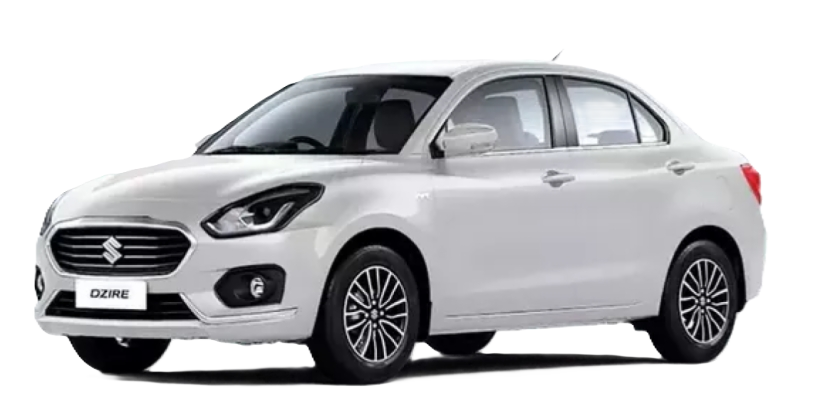
sloping rooflines, and carefully sculpted panels of today's SUVs and sedans are
shaped to cut through air with the same elegance and precision. Even the tyres
of a 4x4 mirror the gripping ability of a snake’s scales. Deep grooves and rugged
patterns provide the traction needed to hold onto loose sand, rocky surfaces,
or muddy terrain, creating the same kind of controlled movement that allows a
snake to glide confidently through the wilderness.
If the snake represents agility, the camel represents
endurance. For centuries, the camel has been the champion of desert survival,
capable of traveling long distances with limited resources. Its body is built
to withstand extreme heat and carry heavy loads while remaining stable on soft
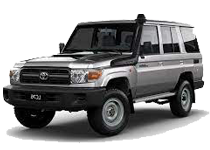
shifting sands. This same philosophy is seen in the strong ladder-frame chassis
of vehicles like the Toyota Land Cruiser 70 Series, the Hilux ,
and other models exported by Sahara Motors FZE. These vehicles are engineered
to survive harsh environments, high temperatures, and long journeys without
fatigue. Their cooling systems imitate the camel’s natural ability to manage
heat, ensuring that the engine remains stable even under the blazing Middle
Eastern sun. Reinforced frames mimic the camel’s sturdy bone structure, giving
the vehicle the strength to carry passengers and cargo over challenging
landscapes.
Cars are becoming more lifelike in many ways, drawing from
creatures both large and small. Some vehicles now use night-vision systems that
give drivers the ability to see in the dark much like nocturnal predators.
Others use aerodynamic underbody airflow inspired by fish gliding through
water. Even the latest self-healing paint technology resembles the regenerative
ability of human skin, slowly repairing minor scratches when exposed to warmth.
Nature continues to offer endless inspiration, and the automotive world
responds by integrating more biological principles into engineering.
At Sahara Motors FZE, this connection between life and machine is especially visible. Every vehicle that enters our showroom carries the spirit of endurance, intelligence, and adaptability. From powerful desert-ready pickups to refined SUVs equipped with the latest technology, each model reflects nature’s most resilient qualities. Whether it is the camel-like durability of a Land Cruiser, the snake-like agility of a Toyota Rav4 , or the human-like intelligence of a modern hybrid system, every car tells a story of evolution, innovation, and life.
This website is secure and your personal details are protected.


.jpeg) SUV
SUV .png) HYBRID/ELECTRIC
HYBRID/ELECTRIC  (1).jpeg) PICKUP
PICKUP .jpeg) SEDAN/HATCHBACK
SEDAN/HATCHBACK .png) WAGON
WAGON  (1).jpeg) VAN/BUS
VAN/BUS  (2).jpg) COUPE
COUPE 








.png)









.webp)


















.png)


.png)