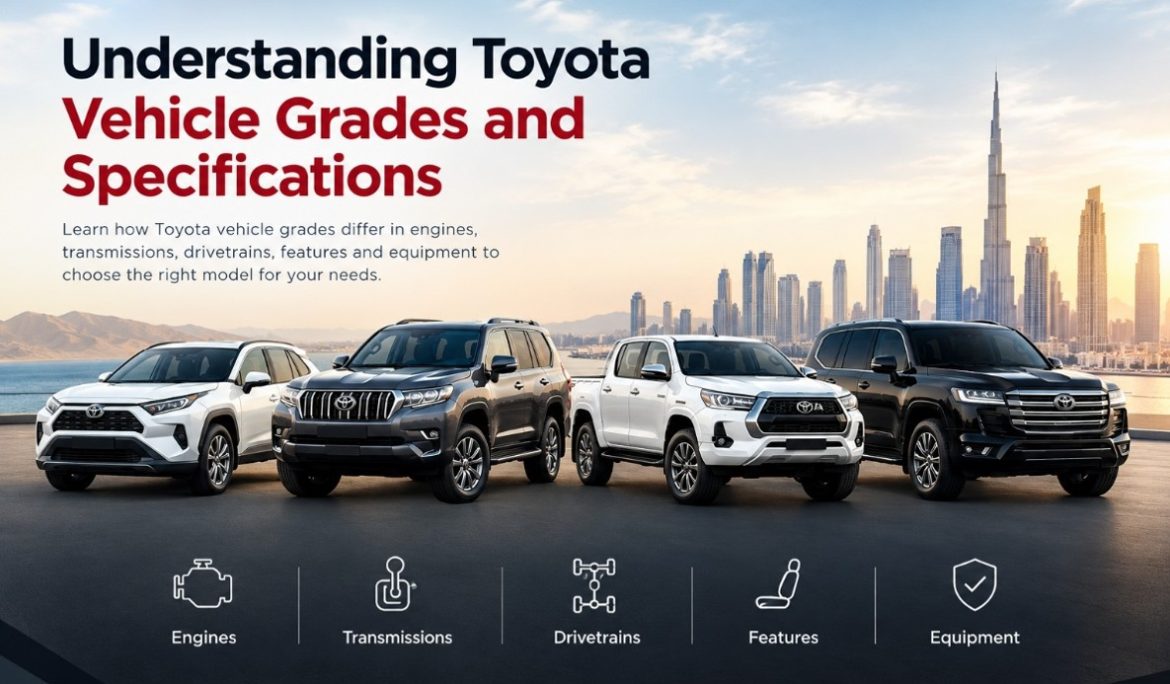
Choosing the right Toyota vehicle involves more than selecting a model. Buyers must also understand its grade, engine, transmission, drivetrain and available features. Even when two vehicles share the same model name, their specifications can differ significantly.
Toyota offers a wide range of vehicles, including SUVs, pickup trucks, passenger cars and commercial vehicles. Each model may have several grades designed to meet different driving needs and equipment preferences. For example, one grade may focus on everyday practicality, while another offers additional comfort, technology or off-road features.
For international buyers, understanding these differences is particularly important. Vehicle specifications can vary by model year, destination market and regional requirements. Therefore, checking the complete specification helps buyers select a Toyota that matches their needs and intended driving conditions.
What Are Toyota Vehicle Grades?
Toyota vehicle grades refer to the different versions of a particular model. Each grade can include a specific combination of features, equipment, interior finishes and technical specifications. As a result, buyers can choose a vehicle based on their priorities and budget.
For example, a Toyota SUV may be available in several grades, with differences in seating, wheel design, infotainment systems, safety features and interior materials. Higher grades may offer additional comfort and convenience equipment. However, the exact features depend on the model and market.
Similarly, Toyota pickup trucks can have different grades that cater to everyday transportation, commercial use or off-road driving. These versions may differ in engine options, drivetrain configurations, exterior equipment and interior features.
However, a higher grade does not automatically mean that every specification is better for every buyer. Some drivers may prioritise comfort and technology, while others need a practical vehicle for work or challenging road conditions. Therefore, understanding the features included in each grade is essential before making a decision.
Understanding Toyota Model Names and Grade Designations
Toyota uses different model names and grade designations across its vehicle range. These names help identify the model and, in some cases, its equipment level or intended application. However, the meaning of a designation can vary between model lines and markets.
For example, Toyota models such as the RAV4, Fortuner and Land Cruiser Prado serve different purposes. The RAV4 is commonly associated with everyday SUV use, while the Fortuner and Land Cruiser Prado offer options suited to buyers seeking additional off-road capability. Within each model line, individual grades can provide different combinations of features and equipment.
Pickup trucks also have different grade designations. The Toyota Hilux, for instance, can be available in versions with different equipment levels, engines, drivetrains and cab configurations. Therefore, buyers should not rely on the model name alone when comparing two vehicles.
In addition, abbreviations and grade names may differ between markets. A designation used for one model year may not represent exactly the same equipment in another version. Checking the official specification for the particular vehicle is the best way to understand what it includes.
Understanding Toyota Engine and Transmission Specifications
The engine and transmission are important factors when choosing a Toyota vehicle. They influence driving performance, power delivery and suitability for different applications. However, the right combination depends on how the vehicle will be used.
Toyota vehicles can be available with different engine types and capacities, depending on the model and market. Buyers may find petrol, diesel or hybrid options across the wider Toyota range. Each powertrain has different characteristics, so it is important to compare the available options carefully.
Engine power, usually measured in horsepower (HP), indicates the engine’s power output. Torque, often expressed in newton-metres (Nm) or kilogram-force metres (kgf·m), describes rotational force. In practical terms, torque can be particularly relevant when carrying loads, accelerating from low speeds or driving on challenging terrain.
The transmission also affects the driving experience. Automatic transmissions can offer convenience in traffic and everyday driving, while manual transmissions provide direct gear selection. The available transmission types vary by model and specification.
Therefore, buyers should compare engine capacity, power, torque and transmission type rather than relying on the model name alone. These details help determine whether a particular Toyota is suitable for commuting, family travel, commercial use or off-road driving.
Understanding Toyota Drivetrain Configurations
A vehicle’s drivetrain determines how engine power reaches the wheels. Toyota offers different drivetrain configurations across its range, including two-wheel drive (2WD), four-wheel drive (4WD) and all-wheel drive (AWD), depending on the model.
Two-wheel-drive vehicles send power to either the front or rear wheels. This configuration can be suitable for regular city driving, highway travel and other everyday applications. However, its capabilities depend on the vehicle design, tyres and road conditions.
Four-wheel-drive systems can provide additional traction on loose surfaces and challenging terrain. As a result, they can be useful for certain off-road applications, including sand, gravel and uneven roads. Nevertheless, not every 4WD system works in the same way, and the available features can vary between models.
All-wheel-drive systems are designed to distribute power across the wheels according to the vehicle’s system design. These systems can help improve traction in changing road conditions, although their operation differs from one vehicle to another.
For this reason, buyers should confirm whether a Toyota model has 2WD, AWD or 4WD before purchasing it. They should also check the specific system and available features. This is particularly important for buyers who intend to use the vehicle on desert terrain, rough roads or other demanding surfaces.
Comparing Toyota Interior, Comfort and Technology Features
Toyota vehicle grades can also differ in their interior design, comfort equipment and technology. These features influence the driving experience and can be important for families, business users and drivers who spend long periods on the road.
Depending on the model and grade, equipment may include fabric or leather upholstery, manual or automatic climate control, touchscreen infotainment systems, smartphone connectivity and different audio configurations. Some versions may also offer additional seating adjustments, parking assistance or convenience features.
Safety and driver-assistance equipment can vary as well. Depending on the vehicle, available features may include airbags, stability control, parking sensors, cameras and driver-assistance systems. However, buyers should verify which features are fitted to the exact vehicle rather than assuming that every grade includes the same equipment.
For family buyers, seating capacity, rear passenger space and climate control may be important priorities. Meanwhile, commercial buyers may focus more on durability, practicality and the features required for daily operations.
Consequently, comparing the equipment list of each grade helps buyers identify the features they need. It also makes it easier to understand the differences between vehicles that appear similar at first glance.
Why Toyota Specifications Can Differ Between Markets
Toyota vehicles are sold in different markets, and their specifications can vary according to regional requirements and customer needs. Differences may include engine options, emissions standards, safety equipment, infotainment features, exterior details and available grades.
For example, a Toyota model offered in one country may have a different engine or equipment package from a similarly named version sold elsewhere. Even vehicles from the same model year can have different specifications depending on the market.
Model year is another important consideration. Toyota may update certain features, equipment packages or powertrain options between model years. Therefore, buyers should confirm the production or model year and review the specification of the exact vehicle they are considering.
Steering configuration can also matter for international buyers. Depending on the destination country’s regulations, a left-hand-drive (LHD) or right-hand-drive (RHD) vehicle may be required or permitted. Buyers should check local import and registration rules before selecting a vehicle.
Understanding these differences helps buyers avoid confusion when comparing listings from different suppliers or markets. Most importantly, it ensures that the selected vehicle’s actual specification matches the buyer’s requirements.
How to Compare Different Toyota Grades Before Buying
Comparing Toyota grades requires more than looking at the vehicle’s appearance or model designation. Buyers should first identify their main requirements, including passenger capacity, intended use, driving conditions and preferred features.
Next, they should compare the engine, transmission and drivetrain. These specifications help establish whether the vehicle is suitable for city driving, highway journeys, commercial applications or off-road use. Buyers should also consider dimensions, seating capacity and luggage space when choosing a family or passenger vehicle.
After checking the main mechanical specifications, buyers can review the comfort and technology equipment. Features such as climate control, infotainment, parking assistance, seat materials and driver-assistance systems can vary between grades. Checking each item individually provides a clearer picture of the differences.
Finally, buyers should confirm the model year, market specification and exact grade. They should also verify any features that are particularly important to their intended use. This approach makes comparisons more reliable and helps buyers choose a Toyota that meets their requirements.
Choosing the Right Toyota Vehicle with Sahara Motors FZE
Selecting the right Toyota involves understanding both the model and its specific grade. Engine, transmission, drivetrain, seating capacity and equipment can all affect whether a vehicle suits a buyer’s needs. Therefore, reviewing the complete specification is an important step before making a purchase.
Based in Dubai, UAE, Sahara Motors FZE specialises in exporting brand-new left-hand-drive vehicles for international customers, automotive dealers, fleet buyers and businesses.
Its vehicle portfolio includes SUVs and 4×4 vehicles, pickup trucks, passenger vehicles and commercial vehicles. Toyota models include the Land Cruiser, Land Cruiser Prado, Fortuner, RAV4, Hilux, Hiace, Camry and Corolla, along with a variety of other models.
Depending on the model and availability, buyers can compare different Toyota grades and specifications to identify a suitable vehicle. This includes reviewing engine options, transmission types, drivetrain configurations, seating arrangements and available equipment.
For international buyers looking for brand-new LHD Toyota vehicles from Dubai, understanding these specification differences can help simplify the selection process. Sahara Motors FZE offers a range of Toyota models and configurations for buyers with different vehicle requirements and intended applications.